Tuesday, May 12, 2009

Thylacine.


Also known as the Tazmanian Tiger, the thylacine is now extinct. Until several thousands of years ago, they were also on Australia, but died out and could only be found in Tazmania until recently.

Though it has the name "tiger" it is not actually related. It's a marsupial -- more closely related to tazmanian devils and numbats (I'll post about these soon). It happens to have developed the tiger stripes independent of the cat family. Coincidentally, thylacines also played a lot of the same ecological roles as the cats (for example, being an apex predator). Also as a result of convergent evolution, it has many similarities to species in the canine family.

They ate wallabies, kangaroos, wombats, and the now extinct, Tazmanian emu.

The last known ones were in captivity in the 1930s -- and many believe there might still be a couple out there somewhere. So though it would be illegal to capture one even if you could find one (trapping laws), you can apparently get up to $3 million in rewards. So, next time you're in Tazmania, be sure to bring your thylacine trap if you're strapped for cash. But be careful, since it's illegal, you might have to go to jail. You win some, you lose some.

They are also on the Tazmanian coat of arms.

Here's a video of the last known thylacine:


Hoatzin.


The Hoatzin of Northern S. America is a fun one for scientists.
People aren't really sure what these are related to, but they seem archaic in morphology which, if true, is a good glimpse of the evolution of some other living birds.

As both large and distinguished birds, its a surprise they are not threatened (good!) nor does it seem likely that they will be. Though many in the area eat larger birds or use feathers for various purposes, the Hoatzin is not ideal for it. Why? They smell terrible and apparently their eggs are revolting. So people only eat it when ABSOLUTELY necessary. Also, they live in mangrove and riparian forest systems -- significantly less threatened than other types of forests in Brazil.

Something interesting about them is they are born with a claw at the end of their wings. They are known to be clumsy, and these claws come in handy when young. Growing up in mangroves is not a safe environment -- all sorts of things wanting to eat chicks might show up, so to counteract bad balance, they can use their claws to climb onto branches or hang on for dear life.

Thursday, May 7, 2009

Red Panda.


OMG ADORABLE.
So red pandas (or if you prefer: poonya, firefox, wah, lesser panda, Himalayan raccoon, etc.) are not actually related to giant pandas. Well, I guess they're both mammals. But they were actually named first -- in their native, their name meas 'bear cat' because of its simalarities to bears and cats. "Panda" itself actually comes from "poonya" meaning bamboo eater. Which is why giant pandas are also called pandas. They eat bamboo.

These guys, as you might guess are related to raccoons, foxes, that sort of thing.

These pictures were taken here in DC so if you want to see them, they're right by the main entrance. I encourage you to go see them. Otherwise, you find them in China.

Their best feature: Their paws are pointing inwards (think: pigeon-footed). It's pretty cute.

Oh and just to put it over the top, watch this (I watched this without sound so I apologize if there's annoying sound or whatever -- I didn't screen for that):


Wednesday, May 6, 2009

Glass Sponge.


Though seemingly ordinary, we have found great use of these animals (yes, sponges are animals). Glass sponges are a family of sponges with incredible structure. As you can see, they look no different than complex crystals. But they're ALIVE. The last two pictures are to show you more details of the structure, but the really cool thing about these things are that they teach us about fiber optics. They are fantastic at sending fast electrical impulses from one end to the other (spreading information) and there are plenty of scientists trying to learn how exactly they do this so we can incorporate it into our own technology arsenal of information sharing.

Oh, and they can live up to 15,000 years (the longest of any living creature).

Tuesday, May 5, 2009

Mola mola.


Or more commonly known as the Ocean Sunfish. Pictures can barely capture the size of these fish giants. Average adults weigh in at 2,200 lbs. They are the largest bony fish in the world (some have cartilage).

The top picture is one from 1910 and weighs in at 3,500 lbs.
They have few known predators; sharks, orcas and sea lions. And people (let's just assume that's a predator for any animal I post, unless otherwise noted?). Their diet is pretty much strictly jellyfish, for some reason. And they live in the tropics. Since today is a busy day at work, that's all the info I'm putting up for today.


Monday, May 4, 2009

Secretary Bird.

The Secretary Bird of Eastern and Southern Africa is often seen wandering through grasslands. This is a picture from my first encounter with one and it was described to me by someone else of having the name "secretary bird" for its "black business pants and secretary hair-do." Another hypothesis of the origins of the name: The name derived from the Arabic saqr-et-tair meaning "Hunter Bird." I'm gonna go with the former explanation.

Another cool thing -- for a long time people thought they were related to eagles because of its head shape, but the crane-like legs through people off. It's related to kites and vultures.

Other cool facts: They stand about 4 feet tall and roost in acacia trees overnight.

They are also on the Coat of Arms for Sudan and S. Africa.

Friday, May 1, 2009

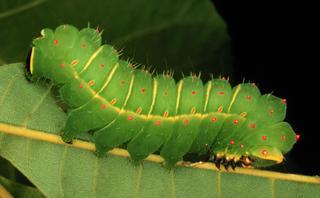
Luna Moth.


Though not terribly common, these moths can be found all along Eastern United States. at 5 " wide, they might be easy to spot when around, but they live for about a week before they die. If you aren't already aware, the winged form is just the mating stage for these animals. To the point that moths don't actually have mouths. No need for eating when you just mate and die!